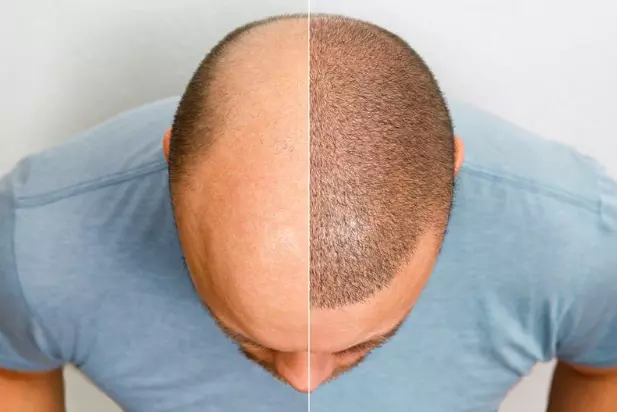

Hair transplantation restores hair density and improves appearance, but many people don’t know whether to choose between FUE and FUT techniques.
When deciding between the FUE hair transplant vs. the FUT hair transplant procedures, you must consider factors such as recovery time, scarring, and cost before choosing a suitable option.
Difference Between FUT and FUE Hair Transplant
Let's begin by understanding the main differences between Follicular Unit Extraction (FUE) and Follicular Unit Transplantation (FUT).
Extraction Method
The FUE procedure involves the strategic extraction of individual hair follicles from a dense donor area. During this step, it’s important to avoid over-thinning of the back of the head. This process takes a few hours. Depending on the number of follicles needed, Dr Gray can generally harvest about 1000 grafts per hour.
On the other hand, the FUT extraction procedure is about removing a strip of tissue from the donor area. It happens quickly and takes about 30 minutes to 1 hour to complete.
Graft Quality
The success of each of these hair transplantation procedures depends on the quality of grafts extracted. High-quality grafts have a protective layer of tissues surrounding the follicles. This layer protects grafts during insertion and prevents them from drying when outside the body. In general FUT yields grafts that are “fatter” meaning there is more tissue around the follicle.
Utilization of Donor Area
When we are young, we have a lot of "excess" hair density. In fact, most people can lose up to 50% of their native hair before the thinning becomes noticeable to others. This same principle applies to hair transplantation—because of the natural excess density in the donor area, up to approximately 50% of the hair can often be harvested without creating a noticeable change in appearance.
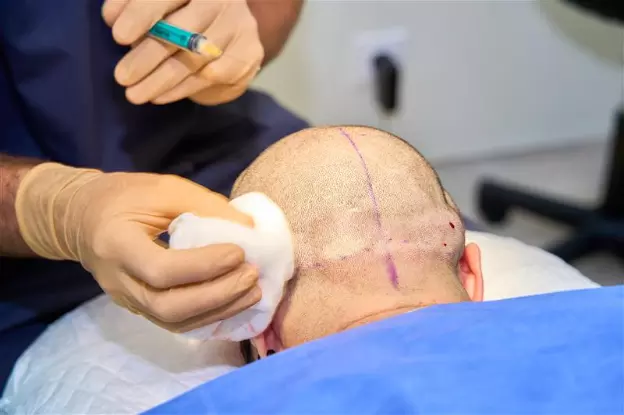
In FUT, a strip of healthy hair follicles is removed from the mid-portion of the donor area. With this technique it is possible to move more grafts in one session and the remaining hair is not thinned as there is only scalp removed.
Donor Scarring
Since the FUT procedure requires extracting a strip of hair follicles, it leaves a linear scar in the donor area. Mostly, it is covered by adjacent hair measuring 0.5 inches. However, if someone keeps their hair short, the single linear scar can become visible.
With FUE, only small dot scars remain in the donor area. These are usually not visible, even with short hair, as they remain hidden under the surrounding hair. If a man prefers to wear his hair very short, this is one reason many opt for FUE.
Healing Time
In FUE (Follicular Unit Extraction), the donor area usually heals in 5-7 days. After that, a person can comfortably resume normal activities. On the other hand, in FUT (Follicular Unit Transplantation), the healing time period is around 10-14 days.
The recovery time is longer with FUT because it involves stitches in the donor area. Since it is more invasive, stitch removal and healing take longer.
Shaving Requirements
Generally, FUE requires shaving only the donor area. But there is no shaving requirement for FUT.
However, an alternative is available in the form of FUE No Shave. At HT&RC, Dr. Gray extracts only the follicles from the donor area that need to be harvested. The hair in the surrounding areas remains at its regular length.
Procedure Cost
Before you choose between these two techniques, you must have the right idea about the FUT vs FUE hair transplant cost. The costs of both FUE and FUT procedures are calculated on a per-graft basis.
Actual costs depend on individual needs, and generally FUE is more expensive than FUT because it is more tedious; however, at HT&RC, the price per graft for either technique is the same at this time.
Choosing the Right Hair Transplant Procedure
Neither FUE or FUT is universally better; it depends on your hair loss and donor area.
Consult your hair surgeon to determine which procedure best suits your individual situation.
At Hair Transplant & Restoration Center, you’ll get to develop a custom hair treatment plan according to your requirements. Both Follicular Unit Extraction and Follicular Unit Transplantation procedures are available to offer you the best hair restoration experience.
Schedule your confidential consultation today.
FAQs
Is a FUT hair transplant better than an FUE hair transplant?
Neither hair transplant procedure is better than the other. The right choice depends on the severity of hair loss and how many grafts are needed. The choice also depends on how short the hair is worn in the donor area.
In FUE, the recovery time is less, and there are no visible scars. Although the FUT procedure is faster and can be less expensive, depending on where you go, at HT&RC, the price per graft remains the same.
Why is FUT cheaper than FUE?
FUT (Follicular Unit Transplantation) usually costs less than FUE (Follicular Unit Extraction) because it involves taking a strip of hair from which grafts are harvested. Thus, it is less labor-intensive for the surgeon and saves time by allowing the extraction of more follicles in a single session.
On the other hand, FUE (Follicular Unit Extraction) is a tedious procedure that requires the surgeon to extract hair follicles individually. At HT&RC, Dr. Gray adheres to the ethical practices set forth by the International Society of Hair Restoration Surgeons, which states that only individuals with a medical license may make incisions during a procedure, ensuring that techs perform only responsibilities within the scope of their technical training. As a result, it requires the surgeon to spend more time and be more precise when making incisions, which adds to overall costs. However, at HT&RC, the price per graft is the same for all procedures.
How many days of bed rest are needed after hair transplant surgery?
There is no required bed rest after the procedure; however, the first week post-op is an important time to allow the grafts to establish and begin the growth process. Patients are provided with detailed post-operative instructions to support optimal healing and growth during this period. Strenuous activities, including heavy weightlifting, competitive sports, and other intense exercise, should be avoided. Walking and normal daily activities are permitted.
Which has a higher success rate: FUT or FUE?
Statistically, FUT could have a little higher success rate than FUE because it has a fatter graft. But if performed by any skilled or experienced hair surgeon, both ensure over 90% graft survival.